

Seychelles trusts for U.S. citizens
Seychelles has trust legislation, trustee roles, registration, tax duties and information exchange rules. The IRS also describes U.S. foreign trust reporting regimes.
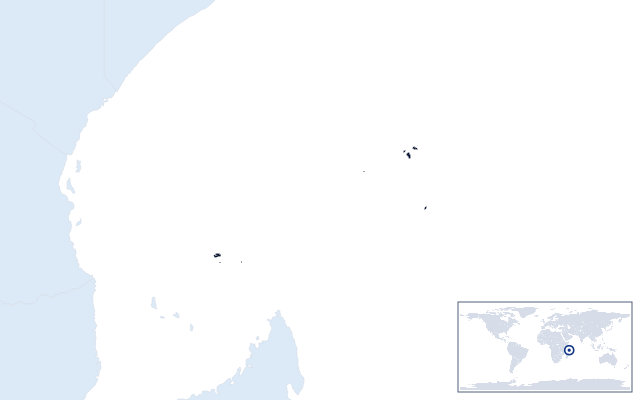
Trust legislation and its organization
The Trusts Act, 2021 provides the legislative framework for Seychelles and foreign trusts. It covers their regulation, with provisions for trusts governed by Seychelles law and trusts governed elsewhere.[5]
Part II principally applies to Seychelles trusts, while its sections 10 through 13 also apply to foreign trusts. These sections address trust property, trustee appointment declarations, appointment notices and registration. Part V contains provisions of general application, extending to foreign trusts to the extent permitted by the context.[5]
A Seychelles trust requires a written instrument. Section 8 describes either a declaration executed by the original trustees or a deed executed by the settlor and original trustees. Property may be provided during the settlor's lifetime or through a will, and section 9 assigns Seychelles law as the governing law of a Seychelles trust.[5]
Trust types, duration and participant roles
The Act recognizes trusts for beneficiaries, trusts for purposes, and arrangements combining those functions. Its definition encompasses property held for one or more beneficiaries, for charitable or non-charitable purposes that do not benefit only the trustee, or for both beneficiaries and purposes.[5]
A charitable trust serves one or more charitable purposes. Section 17 lists specified purposes such as education and health, as well as arts and animal welfare. A purpose trust serves non-charitable purposes and can have beneficiaries or operate without them.[5]
A trust can continue indefinitely unless its terms establish another duration. The Act also permits the settlor to reserve or grant specified powers. These include powers concerning amendments and distributions, as well as participant appointments. Reserving a listed power does not itself make its holder a trustee.[5]
Each trust requires an approved trustee, and co-trustees may reside outside Seychelles. For a trust outside the connected-trust category, the approved trustee is a licensed trustee. For connected trusts, the definition permits either a licensed trustee or a private trust company.[5]
Beneficiaries can be identified by name, class or relationship, and trust terms may allow their addition or removal. A settlor generally cannot be the sole beneficiary or sole trustee. The Act permits a settlor to be the sole beneficiary during life if the terms provide for other beneficiaries after death.[5]
Trust terms may establish a protector, whose permitted powers can include approving distributions or investments. A protector cannot also be a trustee. Trustees administer the arrangement under its terms for the beneficiaries or stated purpose, and their accounting records must explain transactions and support preparation of financial statements.[5]
Regulation, licensing and the public register
The Financial Services Authority regulates Seychelles non-bank financial services and administers trust registration. Its published responsibilities include licensing and supervision in that sector. The Act defines a licensed trustee by reference to a company licensed for trustee services under the International Corporate Service Providers Act.[1][5]
The FSA describes separate licences for international corporate services, international trustee services and foundation services. Its explanation of trustee services includes work connected with trust formation, registration or administration, and acting as a resident trustee. These are categories of regulated business activity.[1]
An approved trustee applies to register its appointment declaration with the FSA. The declaration supplies the trust's name, formation details, approved trustee particulars and governing law. Following registration, the Authority assigns a trust reference number and issues a registration letter to the submitting trustee.[5]
The statutory register includes trust names, reference numbers and approved trustee names and addresses. Section 13 permits any person to inspect the register during ordinary office hours after paying the specified fee. It also provides for inspection of the documents identified in that section.[5]
Seychelles tax and fiscal obligations
Section 87 imposes notification and return obligations when a trust derives assessable income in Seychelles. The Act uses the Business Tax Act definition of assessable income. Trustees have one month from the first such income to notify the Authority in writing and describe the activities producing it.[5]
Within one year of deriving that first assessable income, trustees also submit an annual return accompanied by financial statements meeting the specified Companies Act requirements. The Authority forwards the income notification to the Seychelles Revenue Commission. These provisions create filing duties linked to the trust's income.[5]
Section 87 also sets stamp duty treatment for specified trust instruments, including formation instruments and property transfers. Its exemption is subject to subsection (4), which addresses ministerial regulations and instruments involving Seychelles immovable property or interests in entities holding such property.[5]
Information exchange and ownership records
The Seychelles Revenue Commission is the competent authority for the Common Reporting Standard and FATCA. Under CRS, reporting Seychelles financial institutions submit prescribed information about reportable accounts to the Commission for automatic exchange.[3]
CRS covers account information, reporting institutions, covered accounts and taxpayers, and institutional due diligence procedures. The Commission describes annual exchanges between jurisdictions. Its rules also require a reporting institution with no reportable accounts for a reporting period to submit a nil return.[3]
Treasury's FATCA jurisdiction table records Seychelles with status "Signed" and a Model 1 agreement. The Commission describes information passing from Seychelles financial institutions to the Seychelles competent authority, which then forwards it to the U.S. competent authority.[3][7]
The Trusts Act requires a trustee-maintained register covering trustees and beneficiaries or beneficiary classes. It also covers settlors and specified other participants. Required particulars include names and addresses, nationality or incorporation information, and entry and departure details. The provisions also record when identified natural persons begin or cease exercising control over the trust.[5]
The Act's beneficial-owner definition excludes a nominee holding property for another person. A licensed approved trustee keeps the participant register at its principal business premises in Seychelles; a private trust company keeps it at its Seychelles registered office.[5]
U.S. tax and reporting regimes
The IRS defines a domestic trust as one for which a U.S. court can exercise primary supervision over administration and one or more U.S. persons have authority to control all substantial decisions. A trust outside that definition is classified as foreign.[9][10]
U.S. ownership under the grantor trust rules generally brings the trust's income into the owner's U.S. taxation. A U.S. beneficiary receiving a foreign nongrantor trust distribution generally reports the beneficiary's share of distributable net income.[9]
- Form 3520 generally reports foreign trust creation and transfers, along with ownership and distributions. Loans and uncompensated use of trust property can also trigger reporting. The instructions require an owner to complete Part II even during a tax period without trust transactions.[9][10]
- Form 3520-A provides annual information for a foreign trust with a U.S. owner. The IRS assigns the U.S. owner responsibility for ensuring filing and required annual statements. If the trust does not file, the owner files a substitute attached to a timely Form 3520.[9]
- Form 8938 may apply when specified foreign financial assets exceed the applicable reporting thresholds. The thresholds apply to the combined value of specified foreign financial assets in which the person has an interest.[9]
- FBAR reporting may apply to a person with a financial interest in, or signature authority over, a foreign financial account. FinCEN Form 114 is the relevant report, and foreign trust accounts can be subject to reporting.[9]
Reporting exceptions have defined conditions. The IRS describes exceptions for certain retirement and benefit arrangements, including qualifying arrangements under Rev. Proc. 2020-17. It states that these exceptions leave possible Form 8938 and FBAR obligations in place.[9]
Judicial and legal system structure
The Judiciary is an independent constitutional branch subject to the Constitution and Seychelles law. Its structure includes the Court of Appeal and the Supreme Court, which includes the Constitutional Court. Legislation establishes subordinate courts and tribunals.[4]
The Court of Appeal occupies the highest level, headed by its President. The Chief Justice heads the Supreme Court and administers the Judiciary with a management team. Subordinate bodies include magistrates' courts, the Family Tribunal, Employment Tribunal, Juvenile Court and Rent Board.[4]
Primary sources
The Republic's Official Gazette publishes the Trusts Act, while the Financial Services Authority explains its regulatory remit and licensing categories. The FSA directs readers to the Gazette version for interpreting and applying legislation.[1][5]
The Seychelles Revenue Commission describes international tax exchange obligations, and the Judiciary publishes its institutional structure. U.S. Treasury supplies the FATCA jurisdiction table; the IRS supplies the foreign trust reporting explanation and Form 3520 instructions.[3][4][7][10]
More on Seychelles
Seychelles trust law and the Trusts Act
The principal Seychelles trust statute is the Trusts Act, 2021, enacted as Act 34 of 2021. Its long title covers the creation and registration of Seychelles and foreign trusts, their administration and regulation, and related matters. The Act defines a foreign trust by reference to a proper law outside Seychelles, and a Seychelles trust as one created or established under section 8.[5]
The Act is arranged in seven Parts. Part I covers preliminary matters, including commencement, interpretation, recognition, settlors, proper law and jurisdiction. Within Part II, Chapter 2 concerns beneficiaries and information, while Chapters 8 and 9 concern protectors and enforcers. Part III covers Court powers, while later Parts address foreign trusts and rules with broader application.[5]
The establishment provisions address written trust instruments, registration, trustee appointments, trust property and duration. Part II applies to Seychelles trusts, with sections 10 to 13 also applying to foreign trusts. Beneficiaries may be named or identified by class or relationship. Subject to the trust terms, a beneficiary may make a written request to inspect or obtain specified trust documents and financial information.[5]
A trustee must keep trust property separate from personal property and maintain records for each trust. Other provisions cover variation, revocation, accumulation, advancement, failure or termination, and the roles of protectors and enforcers. The Act also sets out Court powers, provisions concerning foreign trusts, and general fiscal matters.[5]
Questions and answers
Can a Seychelles trust have an indefinite duration?
The Act permits indefinite duration unless the trust terms specify otherwise. A particular trust's terms can therefore establish its own duration.[5]
Can a U.S. settlor also be a beneficiary?
The Act permits a settlor to be a beneficiary, subject to its role restrictions. It permits sole beneficiary status during the settlor's life when the terms provide for other beneficiaries after death.[5]
Can members of the public inspect the trust register?
Section 13 permits inspection by any person during ordinary office hours on payment of the specified fee. The register includes the trust's name and approved trustee particulars.[5]
Does Form 3520 ownership reporting require a transaction?
The instructions require a U.S. owner to complete Part II even without trust transactions during the tax period. A substitute Form 3520-A may also be required.[10]
Does an exception for trust forms remove other reporting?
The exceptions to Forms 3520 and 3520-A reporting described by the IRS do not remove other reporting obligations. Form 8938 and FBAR can still apply under their respective rules.[9]
Related resources
Related glossary terms
- Trust register: A trust register is an official record of trusts, their parties or trustees, such as the UK Trust Registration Service and EU beneficial-ownership registers.
- Foreign grantor trust: A foreign grantor trust is a foreign trust treated as owned by a grantor, often a U.S. person. Ownership brings Form 3520 and Form 3520-A reporting duties.
- Trust: The Hague Convention describes a trust as a relationship in which a settlor places assets under a trustee's control for beneficiaries or a specified purpose.
Related articles and guides
- BVI trust tax rules and U.S. reporting: The British Virgin Islands Trustee Act describes income tax treatment for trusts and beneficiaries. IRS rules address U.S. person reporting for foreign trusts.
- Bahamas Trust Tax and Reporting Rules: Bahamas trust rules on trustee duties, accounting records and certain tax matters, with the IRS reporting that applies to U.S. citizens with a foreign trust.
- Cayman Islands trust tax and reporting rules: Cayman Islands rules on exempted trusts and administrative duties, with the IRS reporting rules that apply to U.S. citizens who own or benefit from one.
Tools and official documents
- FinCEN Report 114 (FBAR): foreign account reporting: FinCEN Report 114 (FBAR) for U.S. citizens: account definitions, financial interests, signature authority, trust provisions and the filing requirements it sets.
Sources and data notes
- Seychelles Financial Services Authority, Financial Services Authority. https://fsaseychelles.sc/component/sppagebuilder/page/157. Retrieved .
- Seychelles Financial Services Authority, Fiduciary. https://fsaseychelles.sc/regulated-entities/fiduciary. Retrieved .
- Seychelles Revenue Commission, International Tax. https://src.gov.sc/international-tax/. Retrieved .
- The Judiciary of Seychelles, The Judiciary. https://www.judiciary.sc/the-judiciary/. Retrieved .
- Republic of Seychelles, Official Gazette, Trusts Act, 2021 (Act 34 of 2021). https://www.gazette.sc/sites/default/files/2021-08/Act%2034%20-%20Trust%20Act%202021.pdf. Retrieved .
- Government of Seychelles, Official Gazette, Republic of Seychelles. https://www.gazette.sc/. Retrieved .
- U.S. Department of the Treasury, Foreign Account Tax Compliance Act: agreements and understandings by jurisdiction. https://home.treasury.gov/policy-issues/tax-policy/foreign-account-tax-compliance-act. Retrieved .
- Internal Revenue Service, United States income tax treaties, A to Z. https://www.irs.gov/businesses/international-businesses/united-states-income-tax-treaties-a-to-z. Retrieved .
- Internal Revenue Service, Foreign trust reporting requirements and tax consequences. https://www.irs.gov/businesses/international-businesses/foreign-trust-reporting-requirements-and-tax-consequences. Retrieved .
- Internal Revenue Service, Instructions for Form 3520. https://www.irs.gov/instructions/i3520. Retrieved .
- Financial Services Authority Seychelles, Consolidated Trusts Act, 2021 to 24th August 2026. https://fsaseychelles.sc/legal-framework/legislations. Retrieved .
Dates in this block record when each source was read for this page.